Client
Modern Mirror
Industry
Digital transformation/ Workflow
Stack
Designing the Future of Digital Identity
Digital Humans was an ambitious initiative focused on transforming real people into high-fidelity digital assets that could be used across entertainment, fashion, gaming, virtual production, and emerging metaverse experiences.
The platform combined 3D scanning, avatar management, measurement systems, motion capture workflows, and export pipelines into a unified experience designed to help users create, manage, and deploy their digital selves.
As Product Design Lead, I helped shape the product vision, user experience, information architecture, and interface system across multiple interconnected tools within the ecosystem.
The Challenge
Bridging Physical and Digital Presence
At the time, digital identity platforms were still largely undefined.
While scanning technology was advancing rapidly, there were few examples of products that successfully translated complex 3D workflows into experiences accessible to everyday users.
The challenge was not simply designing screens—it was defining an entirely new category of product.
Users needed a way to understand, manage, and interact with highly technical digital assets while maintaining confidence that their digital representation remained accurate, portable, and useful across multiple environments.
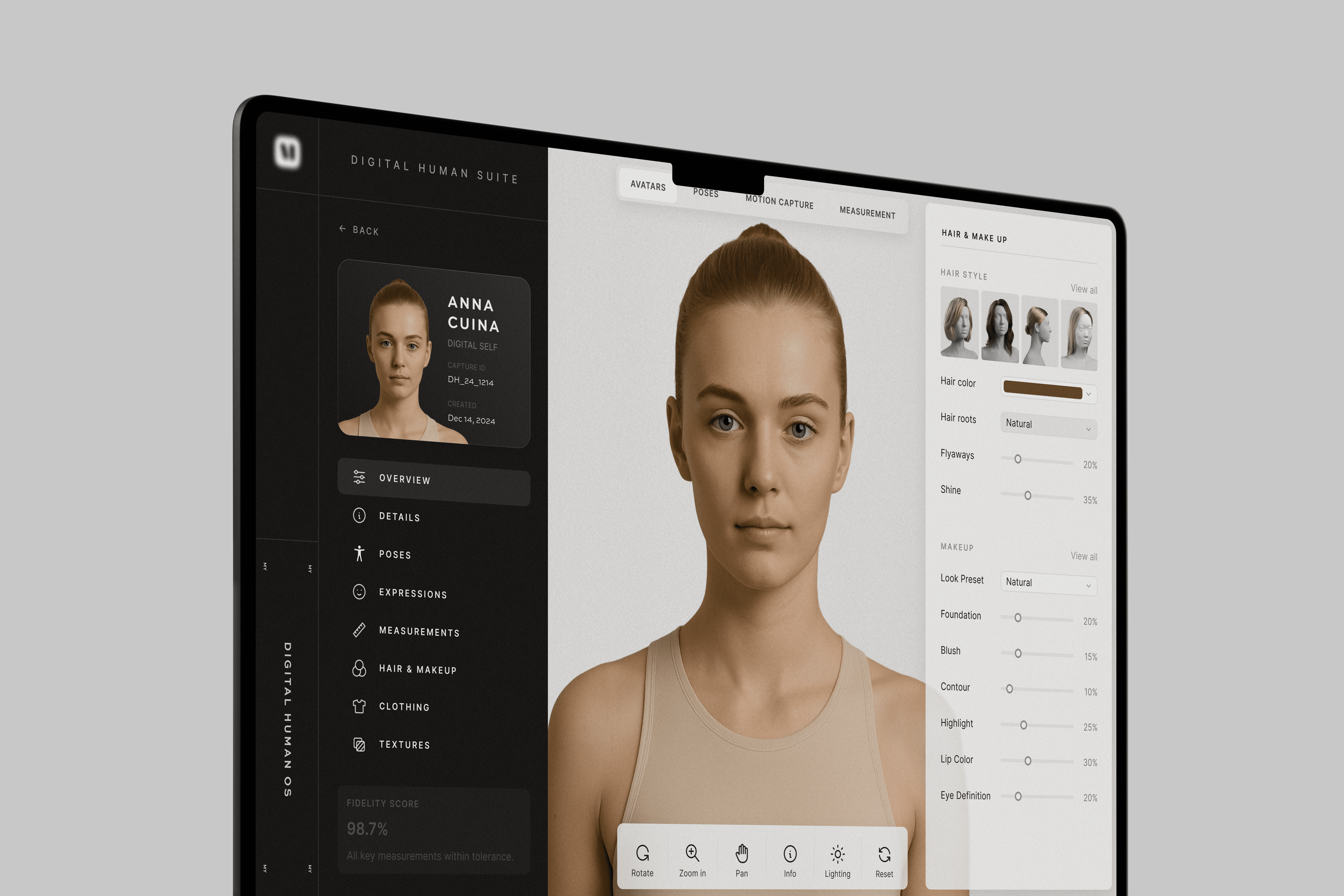
Strategy- Creating a Digital Identity System
Rather than treating scans as isolated files, the platform was designed around the concept of a persistent digital self.
Each digital human became a structured identity containing:
Profile information
Capture metadata
Body measurements
Pose libraries
Motion capture sessions
Appearance customization
Export configurations
This approach transformed a technical 3D asset into a manageable product experience.
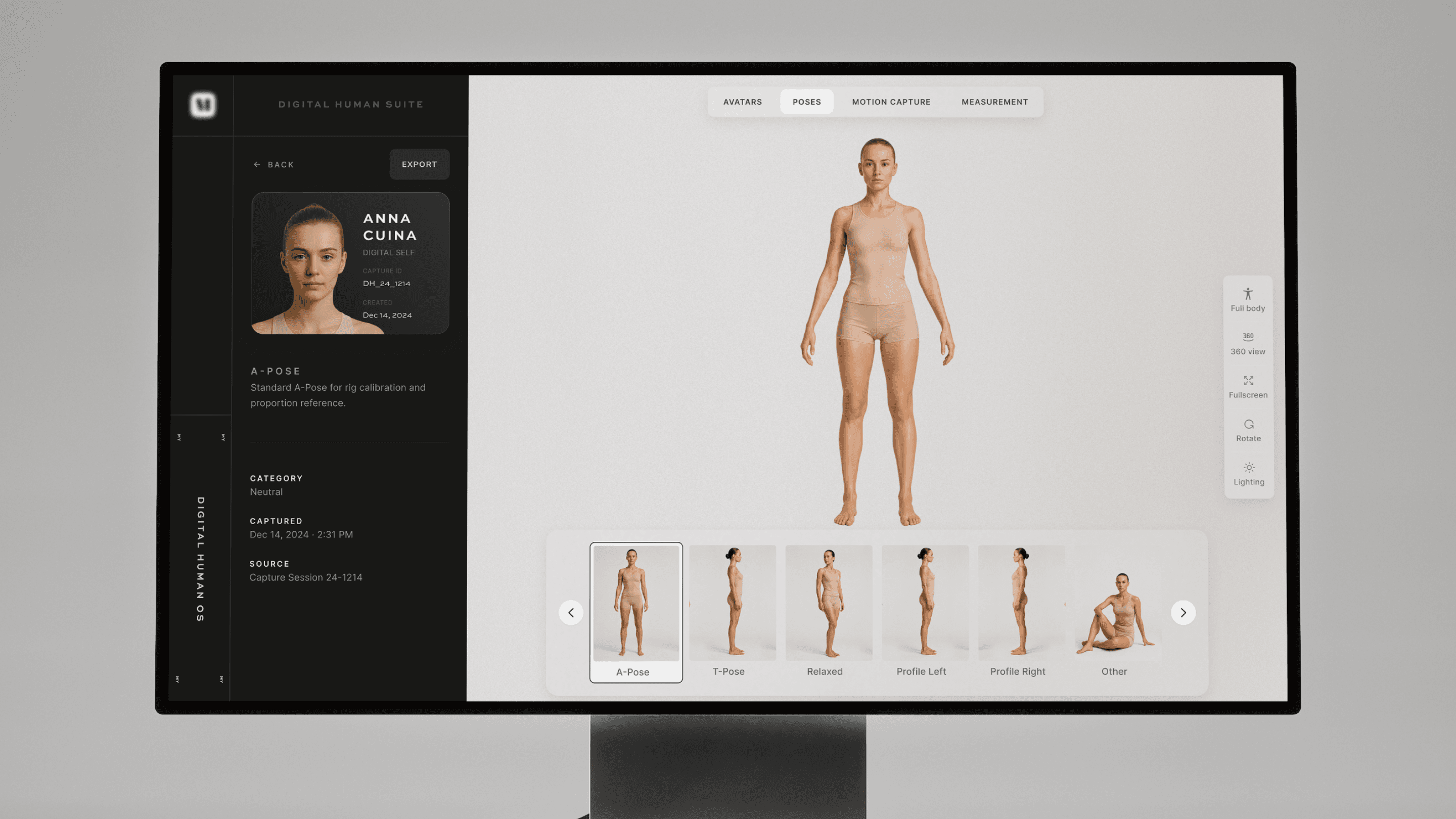
Avatar Management
A Centralized Digital Human Workspace
The avatar experience was designed as the foundation of the platform.
Users could access their digital human profile, review captured data, explore different poses, manage measurements, and navigate between workflows through a consistent interface system.
Special attention was given to creating clarity around complex datasets while maintaining a premium, future-facing aesthetic aligned with the product vision.
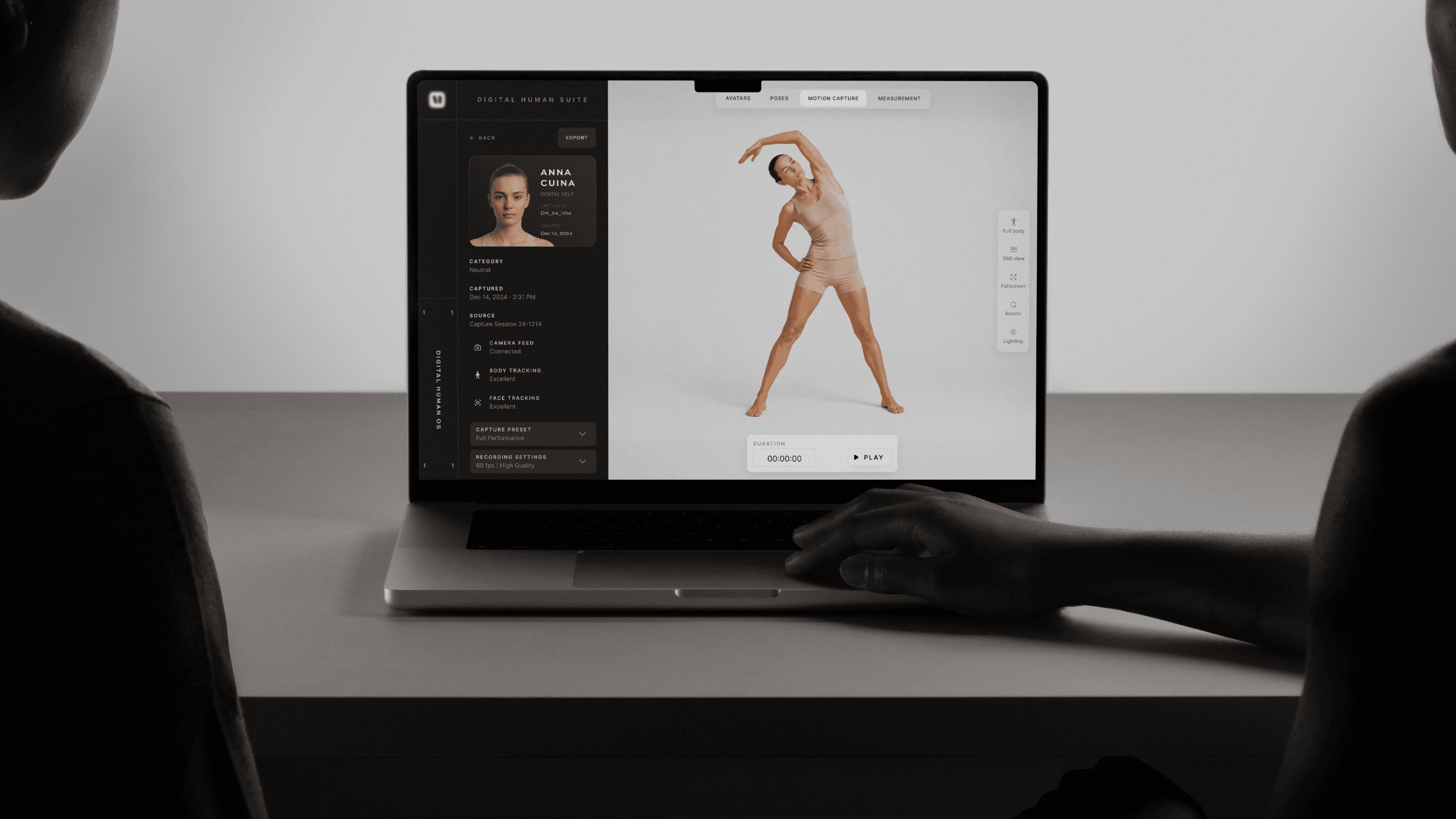
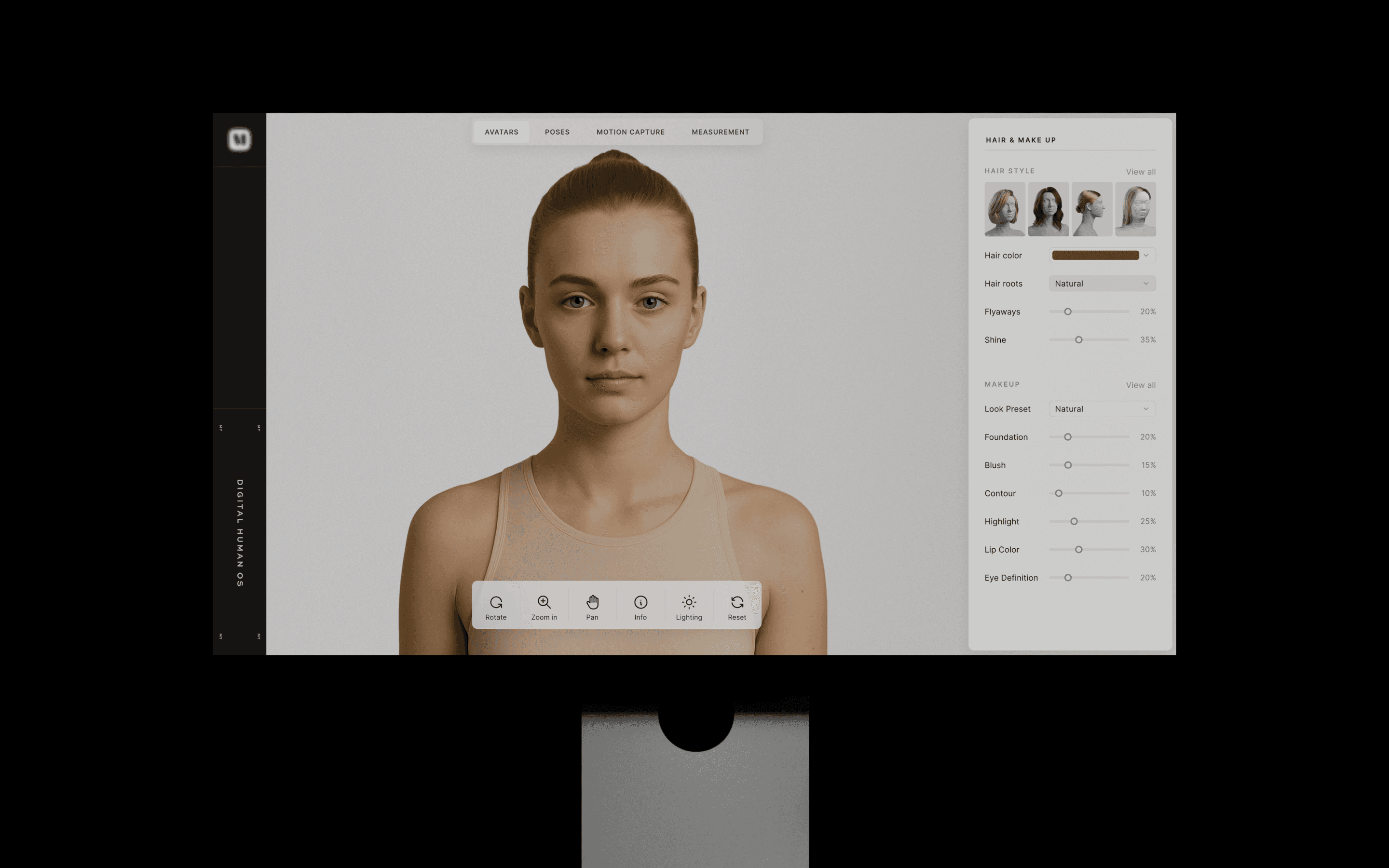
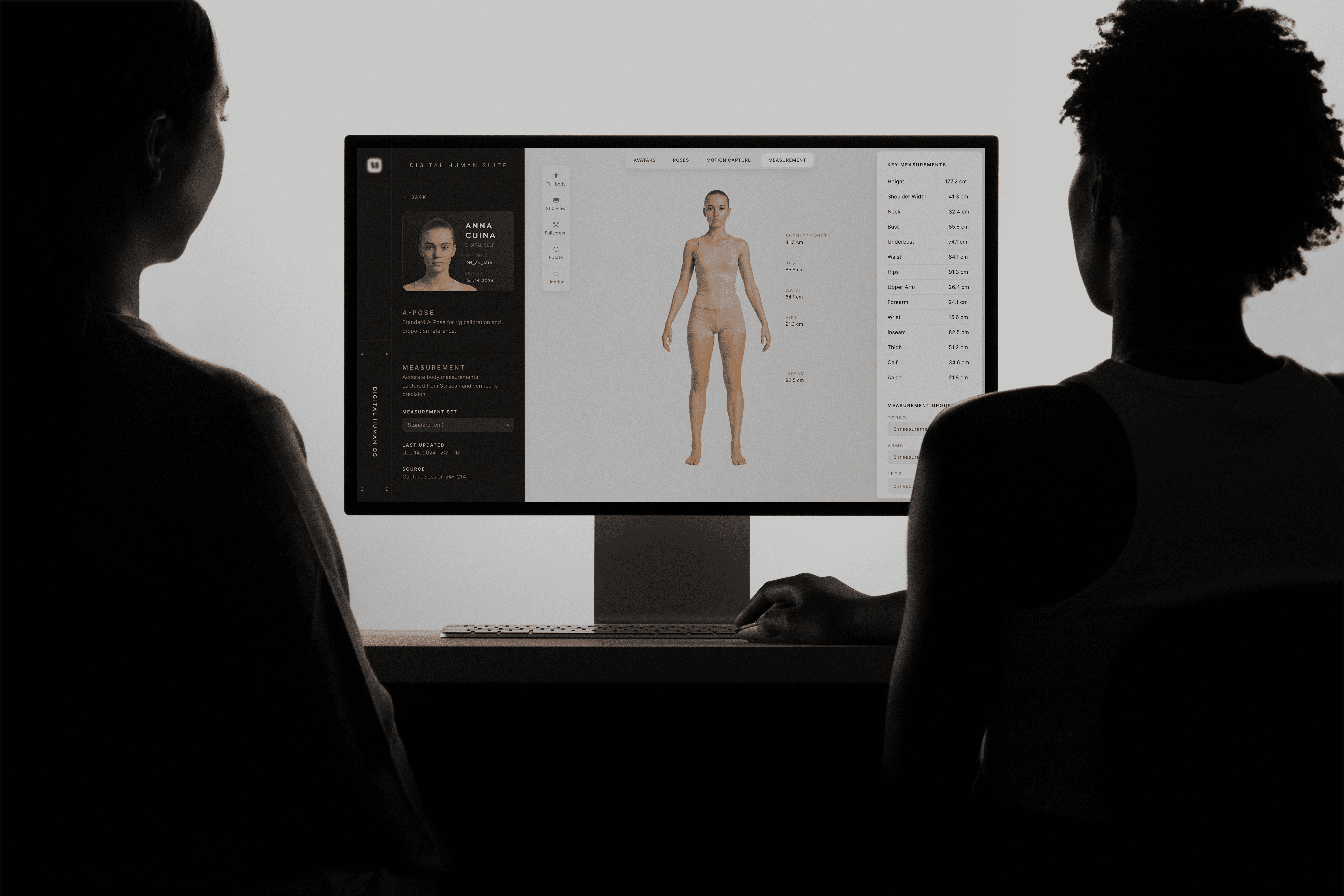
Turning Scan Data Into Actionable Information
One of the most valuable aspects of a digital human is its ability to represent physical dimensions with precision.
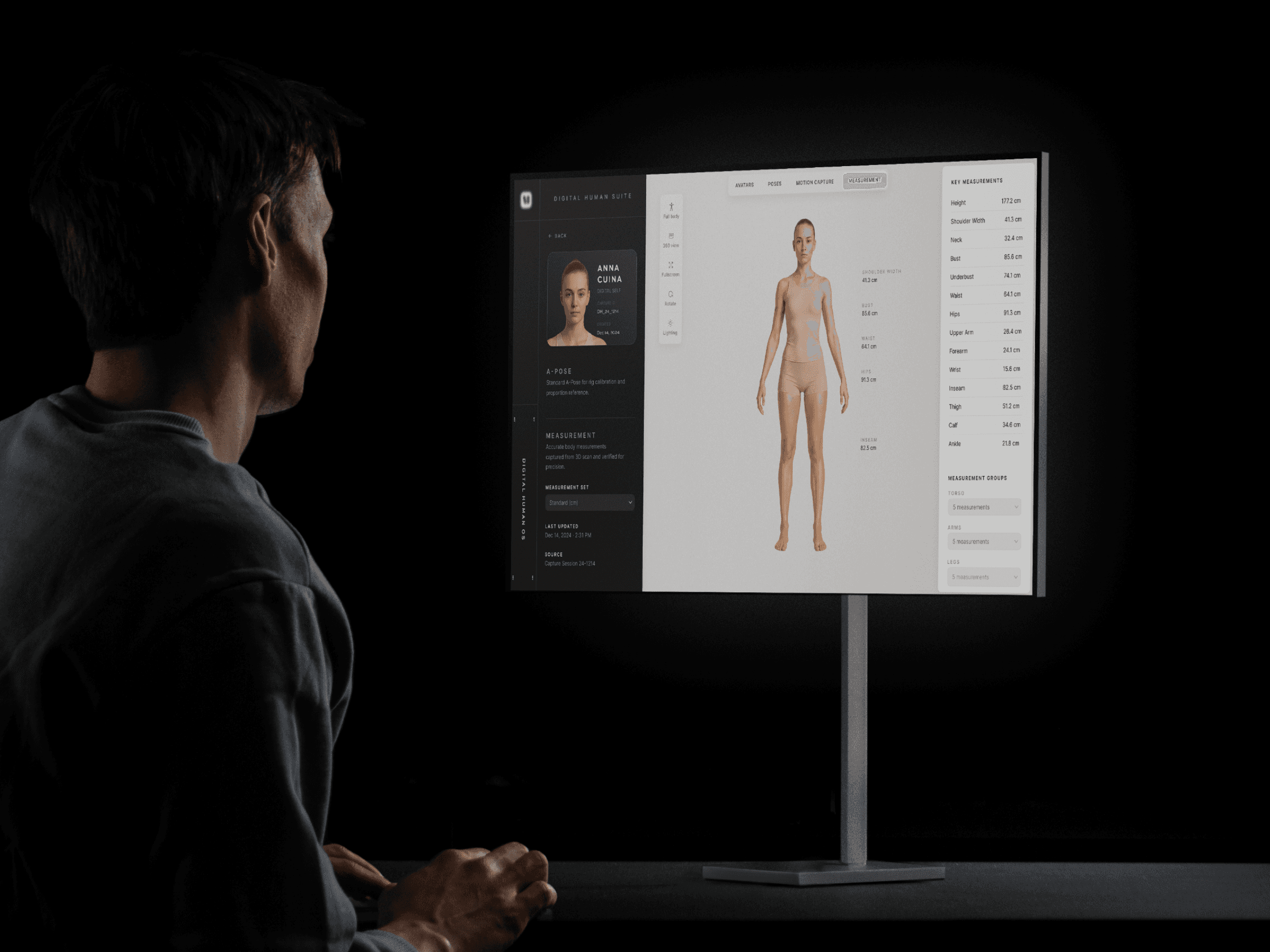
The measurement system was designed to transform raw scan data into a structured, easy-to-understand reference tool.
The interface prioritized clarity while communicating the accuracy and reliability of captured body data.
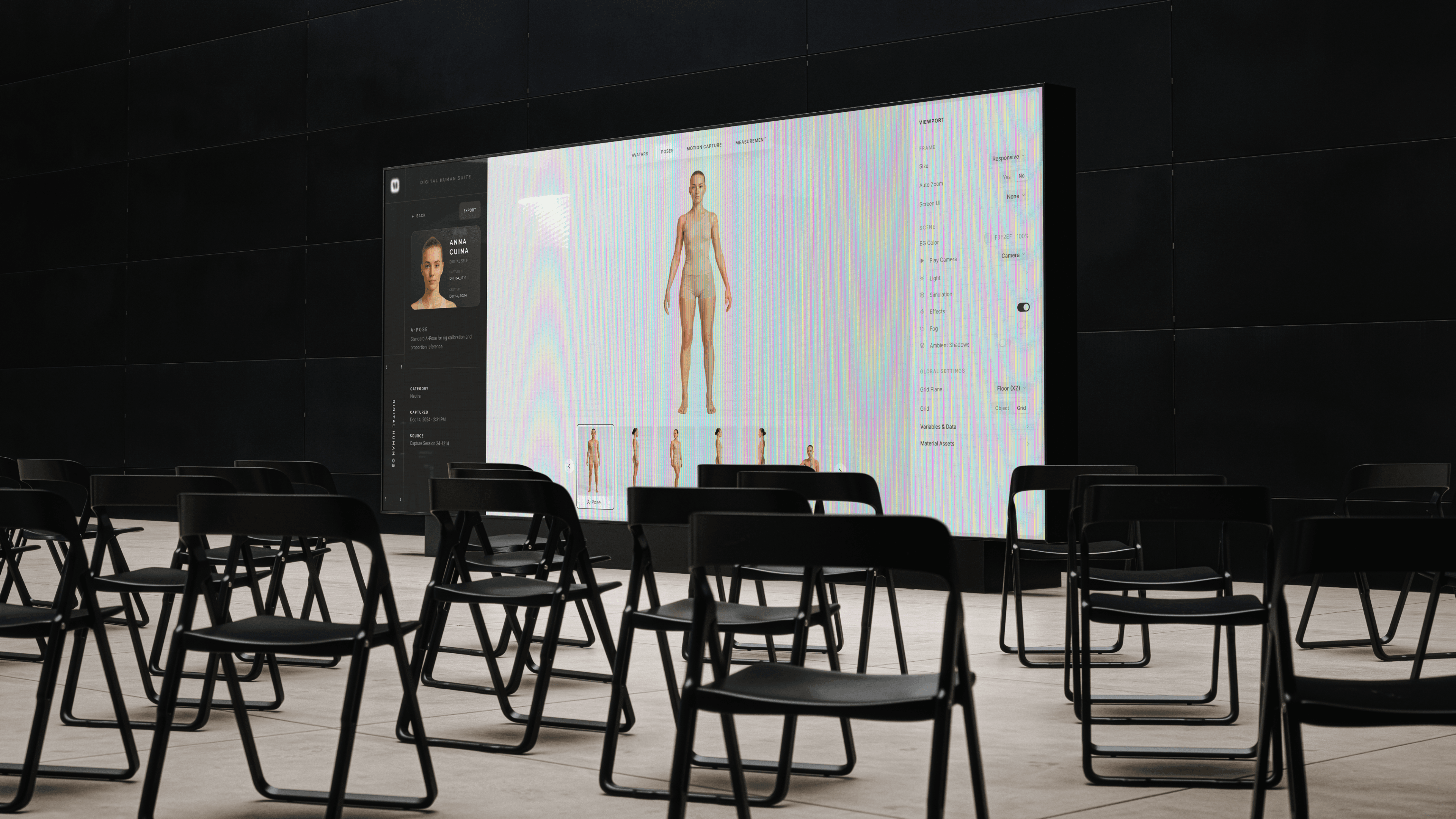
Export Digital Self to Any Platform
A key consideration throughout the product was portability.
Digital humans needed to move beyond the scanning environment and into production pipelines, virtual worlds, creative tools, and future digital ecosystems.
The export experience was designed to help users understand format options, optimization levels, and deployment requirements while keeping technical complexity manageable.
Outcome
Digital Humans represented an early exploration of what digital identity products could become.
The project combined avatar management, measurement systems, motion capture workflows, and deployment tooling into a cohesive experience that anticipated many of the conversations now happening around digital identity, virtual presence, and AI-powered avatars.
While the technology landscape continues to evolve, the project established a strong foundation for thinking about how humans might interact with their digital counterparts in the future.